
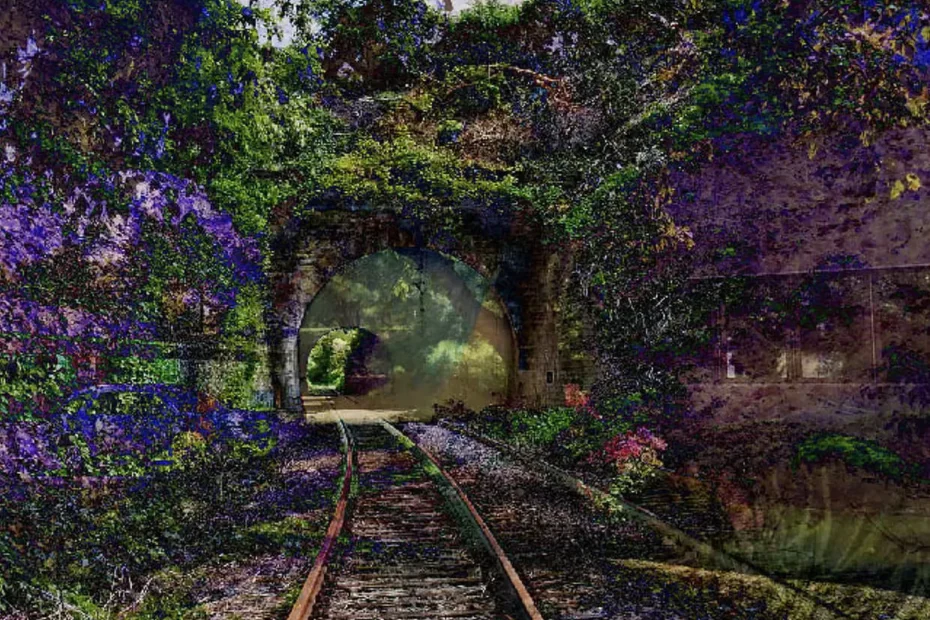
The U.S. Supreme Court’s decision of 2 March 2026 to deny certiorari in Thaler v. Perlmutter may sound significant upon first reading, but it is far less dramatic than some headlines suggest. The D.C. Circuit’s ruling of 18 March 2025 stands: copyright protection requires human authorship, and Thaler’s AI-generated work cannot be registered as a U.S. copyright-protected work.
For months, the case had been framed as a potential turning point for artificial intelligence and U.S. copyright law. In the end, however, the Supreme Court did not issue a sweeping decision or resolve new legal questions about AI. It simply declined to hear the case, leaving the ruling of the U.S. Court of Appeals for the D.C. Circuit in place. That decision upheld the U.S. Copyright Office’s refusal to register “A Recent Entrance to Paradise”, a visual work that Stephen Thaler says was created autonomously by an AI system, which he also attempted to list as the sole author.
Despite both the narrow scope of the case and the inconsequential decision of the Supreme Court, the ordeal has been summarized in headlines such as The Supreme Court doesn’t care if you want to copyright your AI-generated art” and “AI art cannot be copyrighted.” Those claims go much further than the case itself.
First, the Supreme Court made no decision on the merits of the case. It decided not to decide.
Second, Thaler v. Perlmutter asked a very specific question: can a work created entirely by a machine, with no human involvement, receive copyright protection, and can the machine itself be recognized as the author? The answer from the U.S. copyright system was consistent at every stage. If there is no human author involved, there is no copyright registration.
The case did not address whether AI-assisted works (in general) can or cannot be copyrighted, nor did it attempt to define how much human involvement is required to qualify for protection when AI tools are used in the creative process.
The D.C. Circuit itself observed that:
“Undoubtedly, we are approaching new frontiers in copyright as artists put AI in their toolbox to be used in the generation of new visual and other artistic works. The increased attenuation of human creativity from the actual generation of the final work will prompt challenging questions regarding how much human input is necessary to qualify the user of an AI system as an “author” of a generated work, the scope of the protection obtained over the resultant image, how to assess the originality of AI-generated works where the systems may have been trained on unknown pre-existing works, how copyright might best be used to incentivize creative works involving AI, and more. […]
This case, however, is not nearly so complex”
How It Began
The dispute began in 2018 when Thaler filed a copyright application for an entirely AI-generated visual artwork titled “A Recent Entrance to Paradise”.
In Thaler’s description, the Creativity Machine was not simply a tool like a camera, paintbrush, or editing program. It was the entity that created the expressive content itself with no human intervention.
Thaler therefore asked the Copyright Office to register the Creativity Machine as the sole author and list himself as the copyright claimant because he owned the system. In his application he stated that the work had been “autonomously created by a computer algorithm running on a machine.” He later clarified the point further, writing that “it is correct that the present [artwork] lacks traditional human authorship—it was autonomously generated by an AI”.
Once Thaler himself had firmly established that no human was involved in the creation of this work, the question became straightforward. If a work has no human author at all, can it receive copyright protection?
The Copyright Office and the Courts
In 2019, the U.S. Copyright Office rejected Thaler’s copyright application. The Office explained that the work “lack[ed] the human authorship necessary to support a copyright claim.”
The reasoning was simple. Under long-standing U.S. copyright law and practice, authorship requires a human creator. Because Thaler insisted that the work was created entirely by an AI system, the Office concluded that there was no author recognized by copyright law.
Thaler challenged the decision in federal court.
In 2023, a federal district judge agreed with the Copyright Office. The court held that works created entirely by artificial intelligence are not eligible for copyright protection because U.S. copyright law protects only works with human authorship.
Thaler appealed. In 2025, the U.S. Court of Appeals for the D.C. Circuit affirmed the decision.
By that point, the case had become notable not because courts disagreed, but because they did not. Each stage of review reached the same conclusion: some degree of human involvement is required for copyright protection.
The Supreme Court Petition
In October 2025, Thaler’s attorneys asked the U.S. Supreme Court to review the case.
Their petition argued that the Copyright Office had effectively imposed requirements that Congress never explicitly wrote into the statute. They also argued that copyright law has historically adapted to technological change.
In the past, copyright law accommodated new creative technologies such as photography, film, recorded music, digital editing, and software. Thaler’s position was that autonomous generative AI represents the next stage in that technological development, and that copyright law should evolve accordingly.
Earlier this month, the Supreme Court declined to hear the case. The denial did not include a written opinion. It simply means the Court chose not to review the lower court ruling.
In practical terms, the existing interpretation of copyright law remains unchanged.
Thaler’s attorney described the outcome as disappointing but not surprising. The Supreme Court often waits for disagreements between appellate courts, known as “circuit splits”, before stepping in. When multiple courts reach conflicting conclusions, the Court has a stronger reason to resolve the issue. In this case, no such split exists.
What the Decision Actually Means
The practical takeaway from Thaler v. Perlmutter is narrower than many headlines suggest.
The only question the courts were asked to answer was whether a work created entirely by artificial intelligence, with no human involvement at any stage, can receive copyright protection.
Thaler himself maintained that no human contributed to the creation of the image. Under the current interpretation of U.S. copyright law, that point is decisive. Copyright protects works of human authorship. If no human author exists, there is no copyright. To quote the D.C. Circuit Court’s 2018 decision,
“On the record designed by plaintiff from the outset of his application for copyright registration, this case presents only the question of whether a work generated autonomously by a computer system is eligible for copyright. In the absence of any human involvement in the creation of the work, the clear and straightforward answer is the one given by the Register: No.”
The case therefore answers a relatively simple question. It tells us what happens when the human creator disappears entirely.
What it does not answer is the far more common situation in which humans and AI collaborate in the creative process.
Human creativity can appear in many stages of an AI-assisted workflow. It may involve writing prompts, selecting outputs, arranging elements, editing results, or guiding multiple iterations toward a particular artistic vision. These actions may involve meaningful creative judgment, but the law has not yet definitively determined how much human contribution is required for a work to qualify as authored. The US Copyright Office has released guidelines on this topic (here) but these may change from time to time.
In other words, the real legal debate now concerns the boundary between using a tool and creating a work. Thaler’s case avoided that boundary. By insisting that the work was generated by a fully autonomous system, Thaler placed the dispute at the far edge of the legal landscape where the human creator disappears entirely.
The more difficult questions lie in the middle, where humans are clearly involved but the extent of their creative contribution is contested. That middle ground is where the next generation of copyright disputes involving artificial intelligence will likely emerge.
The practical takeaway of the decision is that it raises the legal risk of relying on fully autonomous AI output for commercially valuable content.
Patrick McGranaghan, Pierre Valentin