
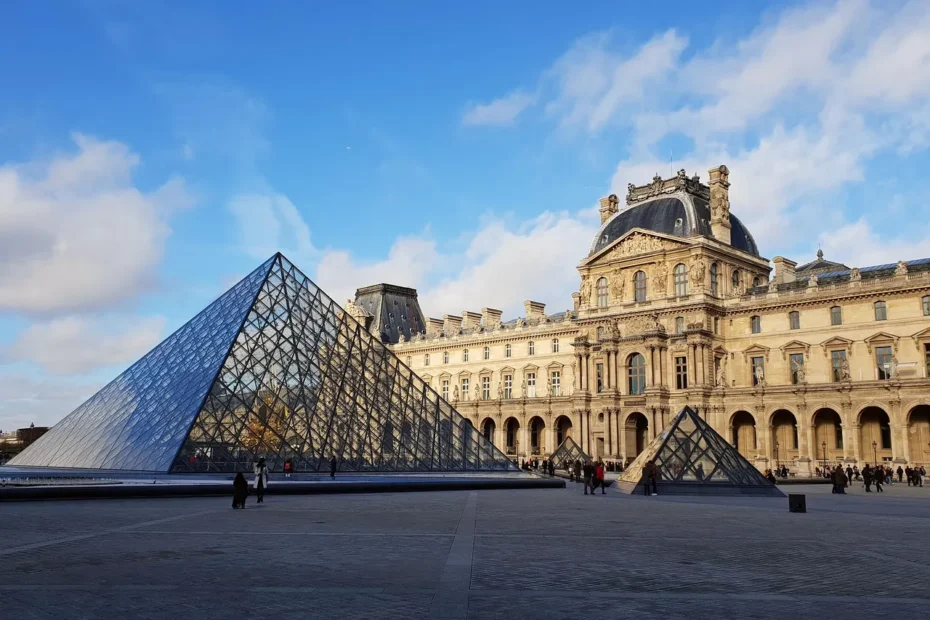
After a turbulent few months, Laurence des Cars has resigned as director of the Louvre.
Many will remember the headline-grabbing €88 million jewel heist last October: four burglars, eight minutes, global coverage. But that wasn’t the only scandal to define Laurence des Cars’ final months at the French museum. Another, less cinematic, scandal also caused some inner turmoil: ticket fraud.
Picture this.
You’ve just bought a ticket for a guided tour of the Louvre. You meet your guide under the glass Pyramid. They raise a yellow umbrella, and you follow them to the entrance. Within minutes, you are gliding through the galleries, blissfully unaware that the fee you just paid for the ticket did not end up in the bank account of the Louvre but in the bank account of your guide, and that the ticket in your pocket was used before and will be used again.
That, prosecutors allege, is exactly what happened for years.
French authorities recently arrested nine individuals in connection with what they describe as an organised ticketing fraud centred on the Louvre and possibly affecting the Palace of Versailles.
The investigation began when museum officials suspected that tickets were being used multiple times. French Police later discovered that certain tour guides were reusing entry tickets repeatedly, splitting larger groups into smaller ones to avoid higher fees and, in some cases, bribing museum employees to smooth their passage through checkpoints. According to reports, the suspected fraudsters may have brought in up to 20 groups per day for nearly a decade, while only paying for one group a day and pocketing the rest of the entry fees. The loss in revenue for the Louvre is estimated to be around 10 million euros.
French authorities have (so far) seized €957,000 in hard cash, €486,000 from bank accounts, three cars, and the contents of numerous safe deposit boxes. Some proceeds were reportedly invested in real estate in France and Dubai.
Prosecutors have charged the nine suspects with organised fraud, use of forged documents, corruption, and aggravated money laundering. Those arrested reportedly include two Louvre cashiers, two tour guides, and an individual believed to be the mastermind. Eight were released under judicial supervision, and one (the supposed mastermind) was remanded in custody. It is believed that more arrests will be made over the coming months, as many sources believe there are more Louvre insiders involved.
For visitors, the experience may feel unchanged: the same queues, the same rush beneath the Pyramid, the same choreography of guides, groups, and checkpoints. But inside the institution, the mood is different. A jewel heist that lasted minutes is one kind of shock. An alleged ticketing fraud scheme that prosecutors say ran for nearly a decade is another: quieter, more systemic, and (if the allegations are proven) built on routine and complicity.
One thing is certain: the Louvre is entering a reset. After weeks of mounting pressure, Laurence des Cars stepped down on 24 February 2026, and the government almost immediately installed Christophe Leribault (until now head of the Palace of Versailles) as her successor.
Leribault has a lot of work to do. “Heavy is the head that wears the crown”, they say. He must rebuild confidence within the institution, restore trust outside it; and, if reports are true, deal with the unglamorous reality of a burst pipe near the Mona Lisa. Maybe it is less of a crown and more of a hard hat?
Patrick McGranaghan, Pierre Valentin